

The Power of Second Chances


Marquita
Brown
___
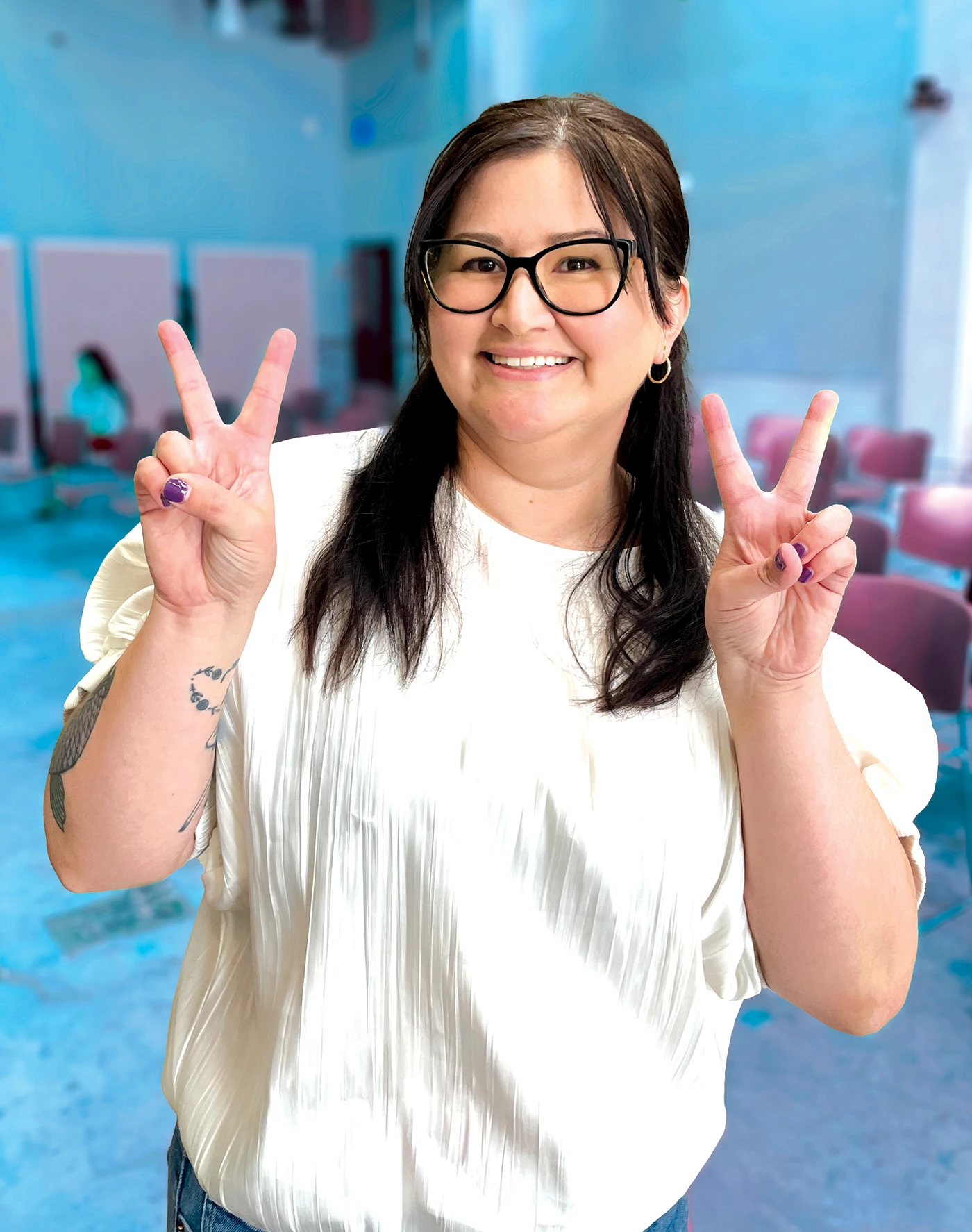
rowing up, Maria Martínez didn’t see higher education as part of their future, let alone the degrees and achievements they’ve amassed in recent years.
She earned a computer science degree from California State University, Northridge in 2022 and a Master of Business Administration last year from Cal Poly-Pomona. She’s a research fellow for Project Rebound, a CSU program that aims to prevent recidivism by connecting formerly incarcerated students to critical resources and helping them build safe, supportive communities. She plans to continue her studies, pursuing a doctorate.
Martínez, 39, who uses she/they pronouns, is in their fifth year as a software engineer for the Walt Disney Company, earning a six-figure salary. In 2023, they co-founded Los Angeles-based Firme Coding, a nonprofit organization that teaches formerly incarcerated people coding and other necessary computing skills. Apple and CSUN’s Global HSI Equity Innovation Hub have awarded Firme Coding a grant “to expand technology and opportunity within the broad community of Hispanic-Serving Institutions.”
Even beyond the accolades and achievements, Martínez is doing work that inspires people and changes lives.
“I never saw this in a million years that I’m the first in my family to get a master’s, and then I’ll be the first to get a Ph.D,” Martínez said.
Instead, long before her current success, Martínez felt set up to fail.
A Downward Spiral
As a child, Martínez experienced instability as her family moved frequently and her parents divorced. She changed schools frequently, too, attending classes in San Pedro, San Fernando and the Eagle Rock neighborhood of Los Angeles — and that was just for high school.
At school, she took classes in English as a Second Language and remedial reading. She struggled with dyslexia, which wasn’t diagnosed until she was in middle school, and attention-deficit/hyperactivity disorder (ADHD).
Martínez lacked support at school. She was mistakenly enrolled in Advanced Placement (AP) English literature and physics classes during her senior year of high school, despite not having completed the prerequisites.
Eventually, she started skipping school. Then, she dropped out.
Four years later, Martínez earned a diploma (GED) from El Monte-Rosemead Adult School, but their life spiraled. They were arrested for robbery and sentenced to six years in Folsom Prison.
If not for the support of their younger sister and a network that included allies and faculty at CSUN who believed in second chances, Martínez said, their life would look very different.
“I don’t think I would be here.”
Beating the Odds
The United States incarcerates women at a rate higher than that of every other country but El Salvador, according to the Prison Policy Initiative, a nonpartisan think tank. Once they’re incarcerated, women don’t receive the same access as men to “diversion and other programs that can shorten incarceration,” the organization reported last year.
The numbers alone don’t address the conditions women face in prison, nor the policies and systems that contribute to their imprisonment. Another challenge is the stigma formerly incarcerated people face after they’re released, which contributes to difficulty finding stable housing, employment and support needed to help them successfully reenter mainstream society.
In other words, they may struggle to get a second chance.
“When it comes to second chances, folks didn’t even have a first chance,” said Lily Gonzalez ’17 (Chicana/o Studies), who served time with Martínez and is a former program coordinator at CSUN for Project Rebound.
Higher education helped Gonzalez and Martínez secure a successful reentry after their release from prison. It also positioned them to support other people who’d walked a similar path.
While incarcerated, Martínez earned an associate degree. She considered working as a hair stylist, but her younger sister, Denise Martínez, saw better options for her. Denise, a software engineer in gaming, suggested Maria consider computer science.
“That was the only thing I had to offer to her when she got out,” Denise Martínez said. She remembered her older sister was good at math, and logic comes naturally to her.
“I was like, ‘Oh hell nah,’” Maria Martínez said, laughing and recalling how daunting the field seemed. She remembered times when Denise cried over the phone because of her job. “At that time, it was very male dominant, and depending on the industry, it still is.”
Maria Martínez eventually returned to school to study computer science. After their release from Folsom, they took classes at East Los Angeles Community College before transferring to CSUN. The sisters met up on weekends, and Denise tutored Maria through the 100- and 200-level courses meant to weed students out.
“One of her biggest strengths is that she’s able to take advice,” Denise said. Maria had to relearn how to trust people after she was released, her sister added.
It helped that Maria Martínez developed a network of mentors and found peers who were formerly incarcerated. The older sister also landed a paid internship, and she met “a ton of people” who were formerly incarcerated or impacted by incarceration, Denise Martínez said.
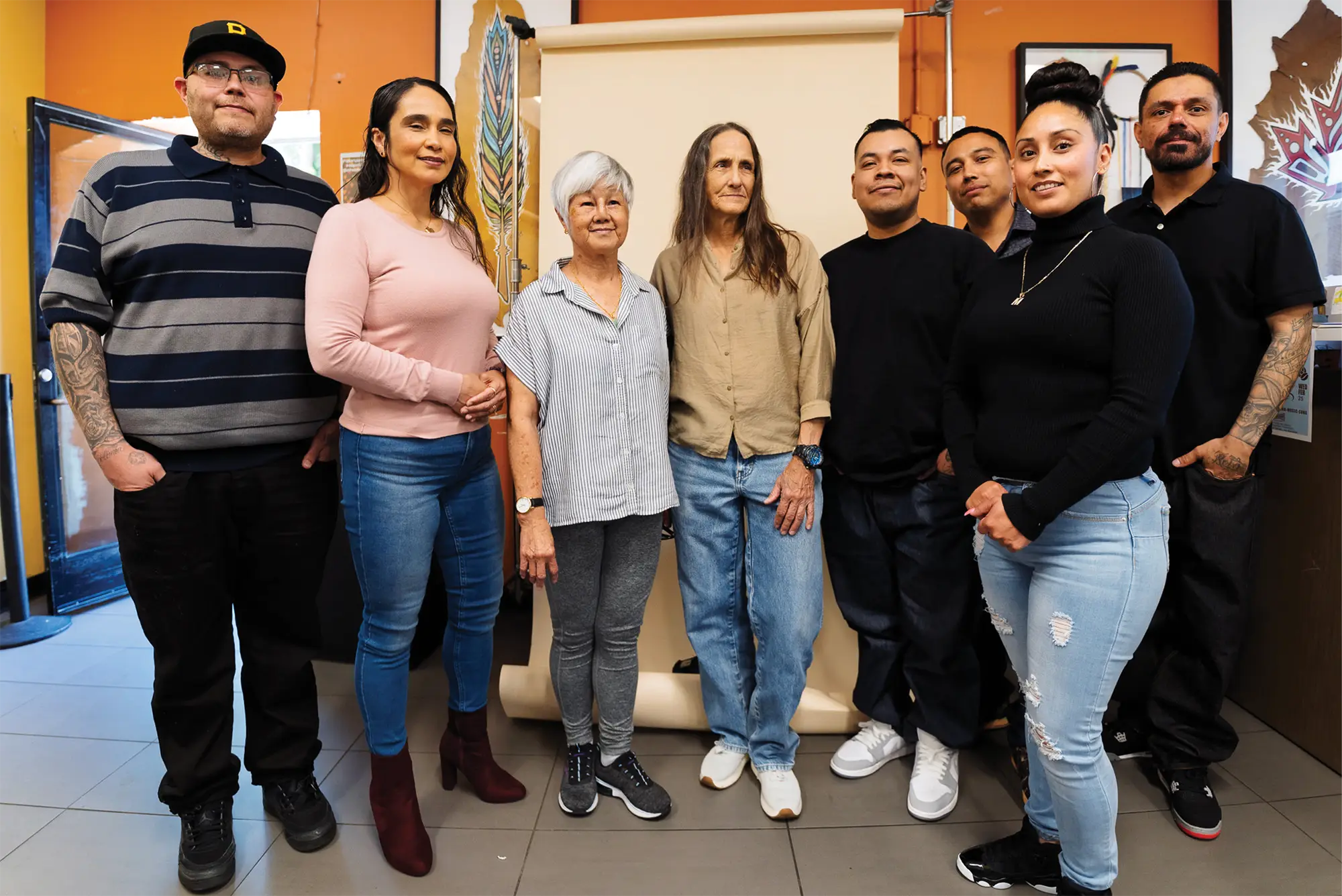

For students like Martínez, those efforts bolstered connections that allowed them to be seen and understood.
“Seeing that people were viewing me for me and what I’m doing now, rather than my past, it made me believe in myself,” Martínez said.
It also helped that Maria had strong support awaiting her at home. She had a place to stay and was able to focus on school, Denise Martínez said.
It’s unusual to see women of color working in software engineering, let alone individuals who had been incarcerated, Denise Martínez told her sister.
“Pay it forward,” she urged her.
Paying it Forward through Technology
At 39, Maria Martínez already has accomplished things that many people never do, her younger sister said.
“You never hear about somebody being locked up for that amount of time and being able to come out and make a stable life from such a historically unstable life,” Denise Martínez said. “That’s something I’m really proud of.”
There were times after she was first released when Maria Martínez didn’t believe in herself. Denise understood self-doubt, too. But she encouraged her sister to keep going.
“It’s really hard not to let those voices and those biases get the best of you,” Denise said.
Maria Martínez shares that lesson and her experiences in the criminal justice system to help people in similar situations. She remembered the confusion of discovering new technology and social media apps after six years in prison. That gap between life on the inside and the rest of the world was isolating.
“I felt so out of place, like an alien,” Martínez said.
Adjusting to life on the outside can involve more than learning new mobile apps or using a smartphone. Students who live in transitional housing may not have a quiet, private space for job interviews. They may not even have a computer to use for job applications.
Employers can be reluctant to offer training on the basics of technology and computing, nor do they understand why some job candidates lack that knowledge.
Through Firme Coding, participants — called fellows — can learn those foundational computing skills. The language used, such as referring to participants as fellows, is intentional, Martínez said. “The program is built around a mentor-mentee model,” she said. “Our instructors don’t just teach content — they build relationships, provide guidance and walk alongside fellows as they grow personally and professionally.”
The program offers evening and weekend classes at Homeboy Industries, a Firme Coding partner and L.A. nonprofit that offers a range of training and support to help people who were formerly involved in gangs or incarcerated redirect their lives. Gonzalez and Maria Martínez are Homeboy Industries graduates.
Firme Coding has 11 or 12 active fellows in its core program and more than 20 alumni, Martínez said. The program’s digital literacy classes at Homeboy Industries reach about 60 participants, they said. “We’re currently running another cohort with them, which will bring us to 90 participants,” Martínez added.
That means a growing number of people will learn skills that are crucial to their new lives.
“You need to be digitally fluent to get a job,” Martínez said. That fluency includes sending an email, joining a Zoom call and much more. “Those skills aren’t taught in prison.”
Martínez recalled helping a recently paroled man who had been accepted into a fully online master’s program and didn’t know how to turn on a laptop.
“So, we taught him,” Martínez said. Firme Coding also gave the man a laptop because he needed one for school. He completed a master’s program and now runs his own nonprofit organization, Martínez said.
Removing such barriers to technology is huge for formerly incarcerated people, she said. The reward of that work is seeing students succeed.
“I haven’t had anyone go back to prison that’s gone through the program,” Martínez said. “Everyone has been employed or has gone on to higher education. I’ve been able to employ three alumni for the program.”
As an instructor, Martínez adjusts her approach to accommodate students’ learning styles, Gonzalez said. “She also celebrates everybody’s wins, every little thing.”
That includes awarding certificates and recognizing birthdays or buying a cake for someone who just completed parole. Martínez assures her Firme Coding fellows that they can succeed despite challenges or taking longer than others to reach their goals. She uses herself as an example and is candid about her experiences, including her time in prison.
“They’ll [ask], ‘Is it normal to have recurring nightmares of being back in prison?’ And I’m like, ‘yeah,’” Martínez said. “In the beginning, I would wake up all scared, you know, because I thought I was still in prison.”
Depression is another challenge formerly incarcerated people face that does not get discussed enough, they said.
“All my friends already had careers and kids, living their best life, and I’m trying to catch up, right? What I learned is, you’re on your own timeline,” Martínez said. “This is your journey. This is your path, and you’re gonna get there eventually. You don’t have to put yourself down.”
Denise Martínez often brags about her older sister’s generosity and resilience. Through Firme Coding and other connections, Maria helps people get back on their feet after incarceration.
“She did that for herself, and she wants to give other people the chance to do that as well,” Denise said. “It takes a village for somebody to come out of something that heavy. I am just so proud.”