

A Feast
of
Public
Art
n CSUN’s expansive, parklike campus, not all of the treasures are natural. Between the lush groves of trees and native-plant gardens, many of the treasures that dot the campus landscape are man-made. Some of the must-see attractions include breathtaking sculptures. The university campus boasts a feast of public art that students, alumni and visitors can explore year-round.
Whether you’re an artist looking for inspiration, a graduate looking for the perfect photo spot or just an Angeleno looking to get outdoors and enjoy something beautiful, CSUN’s public artworks are well worth the visit. Here are some highlights to explore.
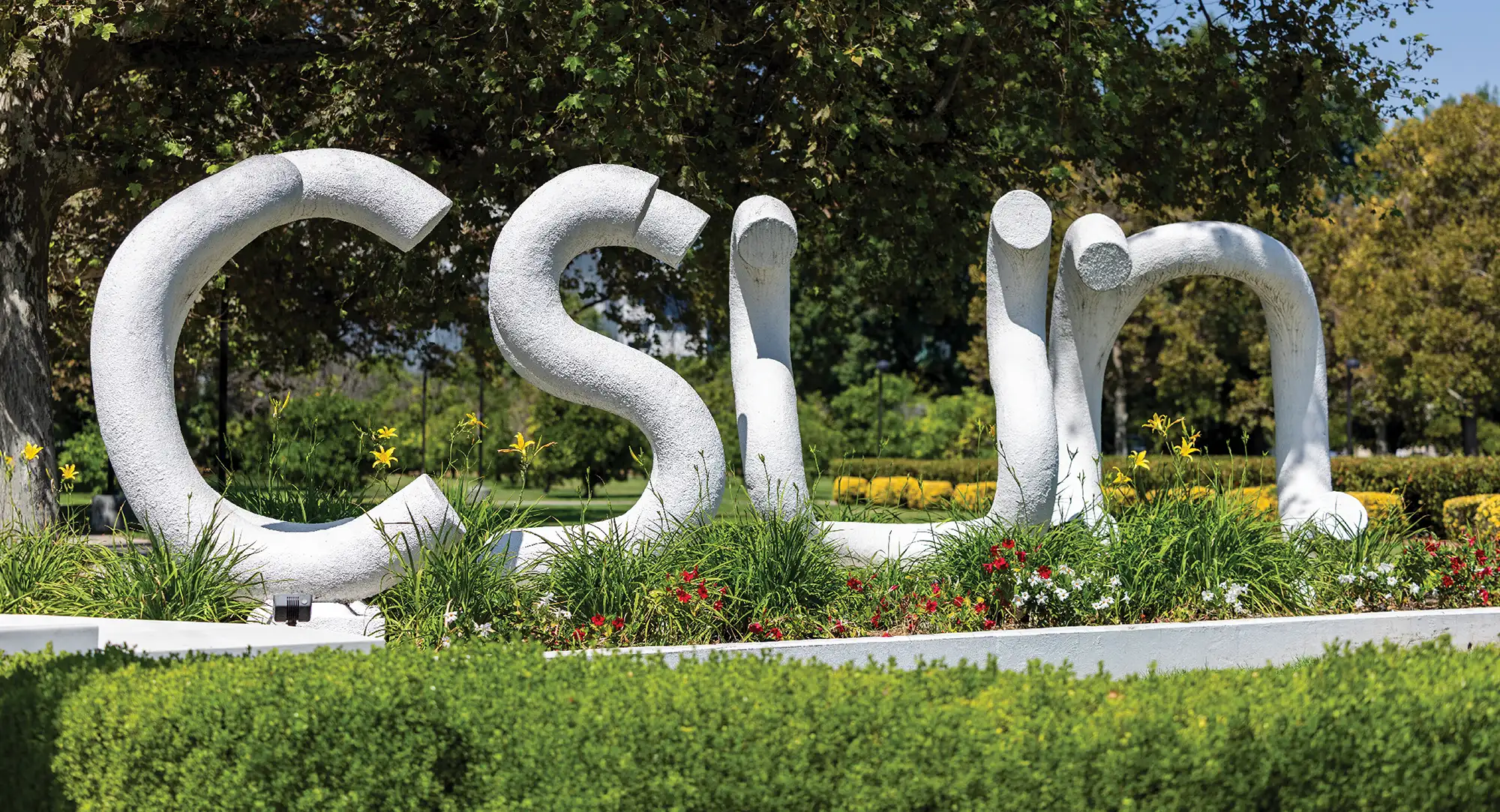
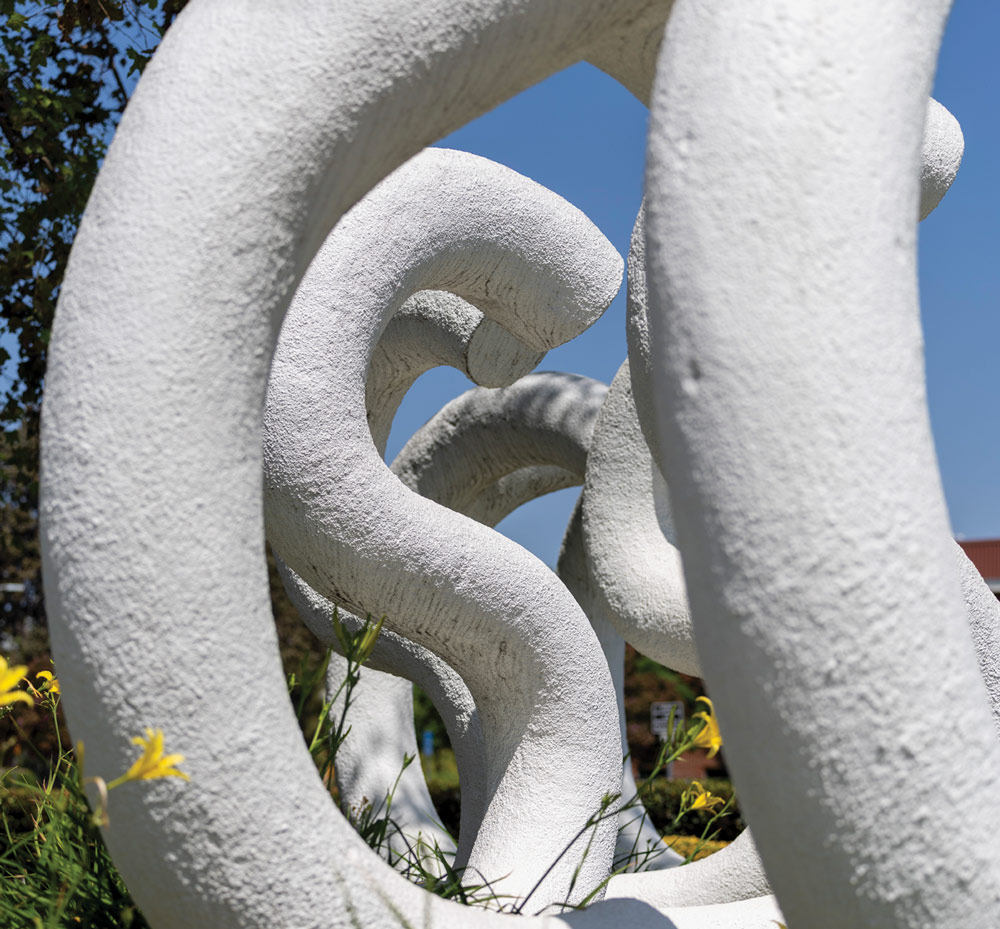
“CSUN Sculpture”
Nestled in a verdant rose garden near the campus orange grove and Monterey Hall, the artwork was designed (and later built) by student John T. Banks ’72 (Art), M.A. ’94 (Three-Dimensional Art).
In 1973, the CSUN Sculpture was selected the winner of a contest to design a sign for the university.
“I was an artist with ideas that needed to be explored,” Banks said in a 2023 interview, when his winning design celebrated half a century. “The CSUN Sculpture did launch my career in art because now, I have sculptures and public art in 38 cities in eight states.”
The CSUN Sculpture’s structure is called Ferro-cement, Banks said. Steel framework covered with a cement coating has been used in building construction and even shipbuilding, he noted. The sculpture was completed in 1975.
Banks worked as a firefighter in Las Vegas. He loved his career as a first responder, one that spanned 30 years. His public work includes the Firefighters’ Memorial of Southern Nevada. He’s worked in a variety of media, including bronze, aluminum, wood, steel, fiberglass and cement.
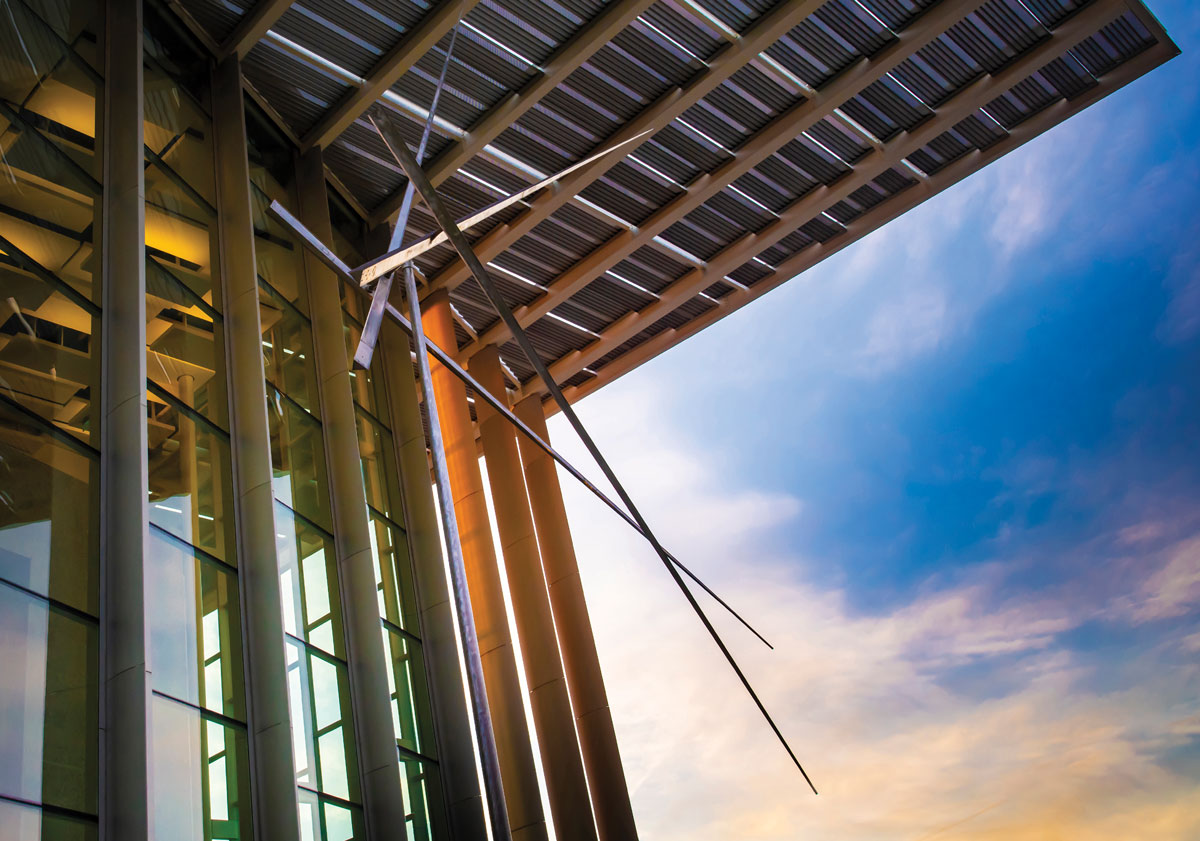
“Two Up, Two Down”
After the 1994 Northridge earthquake caused extensive damage and many years of reconstruction on campus, university officials saw an opportunity for a new and more prominent home for the sculpture. In 2010, when The Soraya opened on Nordhoff Street, the university added a stunning reflecting pool in front of the center — and “Two Up, Two Down” found the perfect new home. In early morning and at sunset, the blades of the sculpture catch the rising or fading light.
Rickey is one of “the most prominent of the artists whose work we have on campus,” according to Jim Sweeters, former longtime director of the CSUN Art Galleries. “The sculpture was originally [intended] to be over water. It looks terrific where it is — we think The Soraya is the perfect location.”
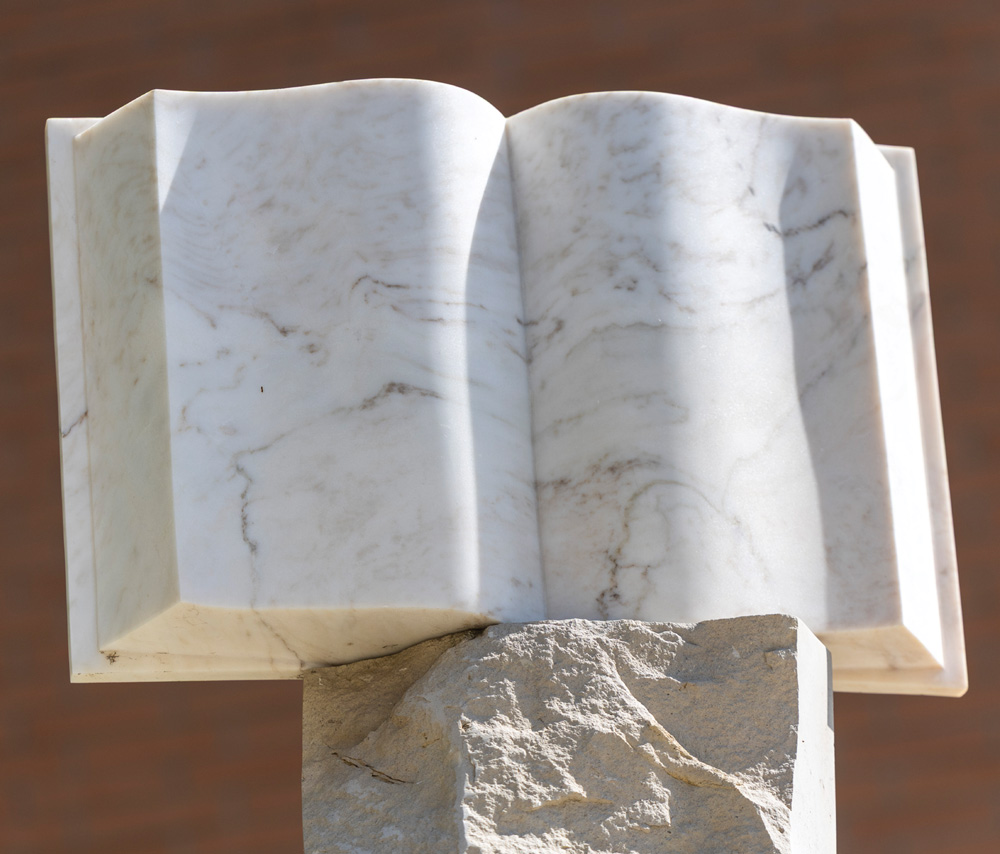
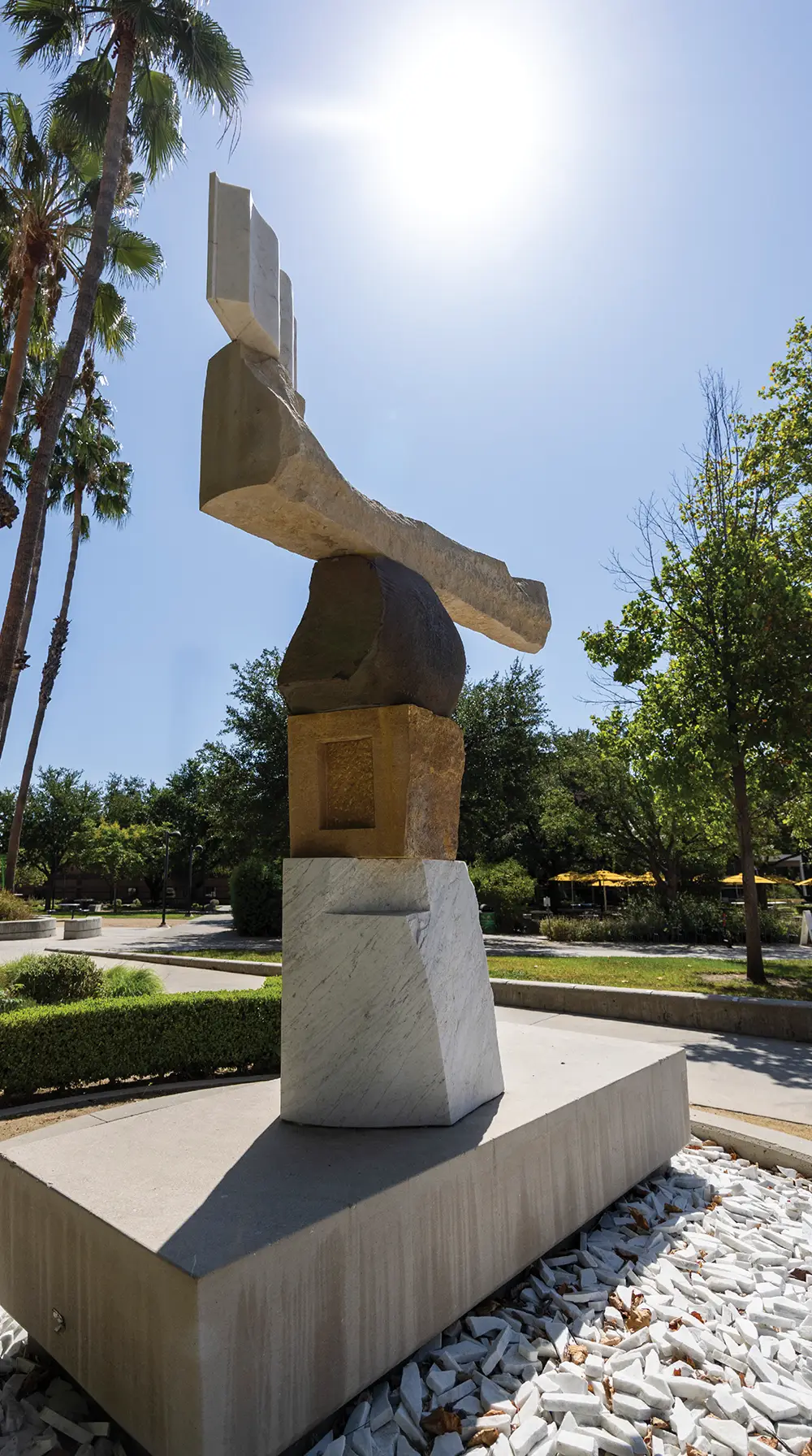
“Unbound”
The name of the artist is familiar: Soraya Sarah Nazarian, proud Matador parent of the business college’s namesake, David ’82 (Business Administration), Hon.D. ’24. An internationally recognized sculptor who works with Carrara marble, Soraya Nazarian’s sculptures have been commissioned by institutions including Milken Community School in Los Angeles, the Hebrew University of Jerusalem and University of Haifa, Israel.
“Unbound” was her first artwork for CSUN, and in 2018 she completed another, “Dancer,” installed at The Soraya’s courtyard in 2021.
“Stone is hard, but it also has life,” she told the Los Angeles Times in 2017, when “Unbound” was installed on campus. The sculpture is made up of six stacked marble blocks of varying shapes and colors. The diversity of the stone reflects the diversity of CSUN’s students, according to the artist.
“Heavenly Hands”
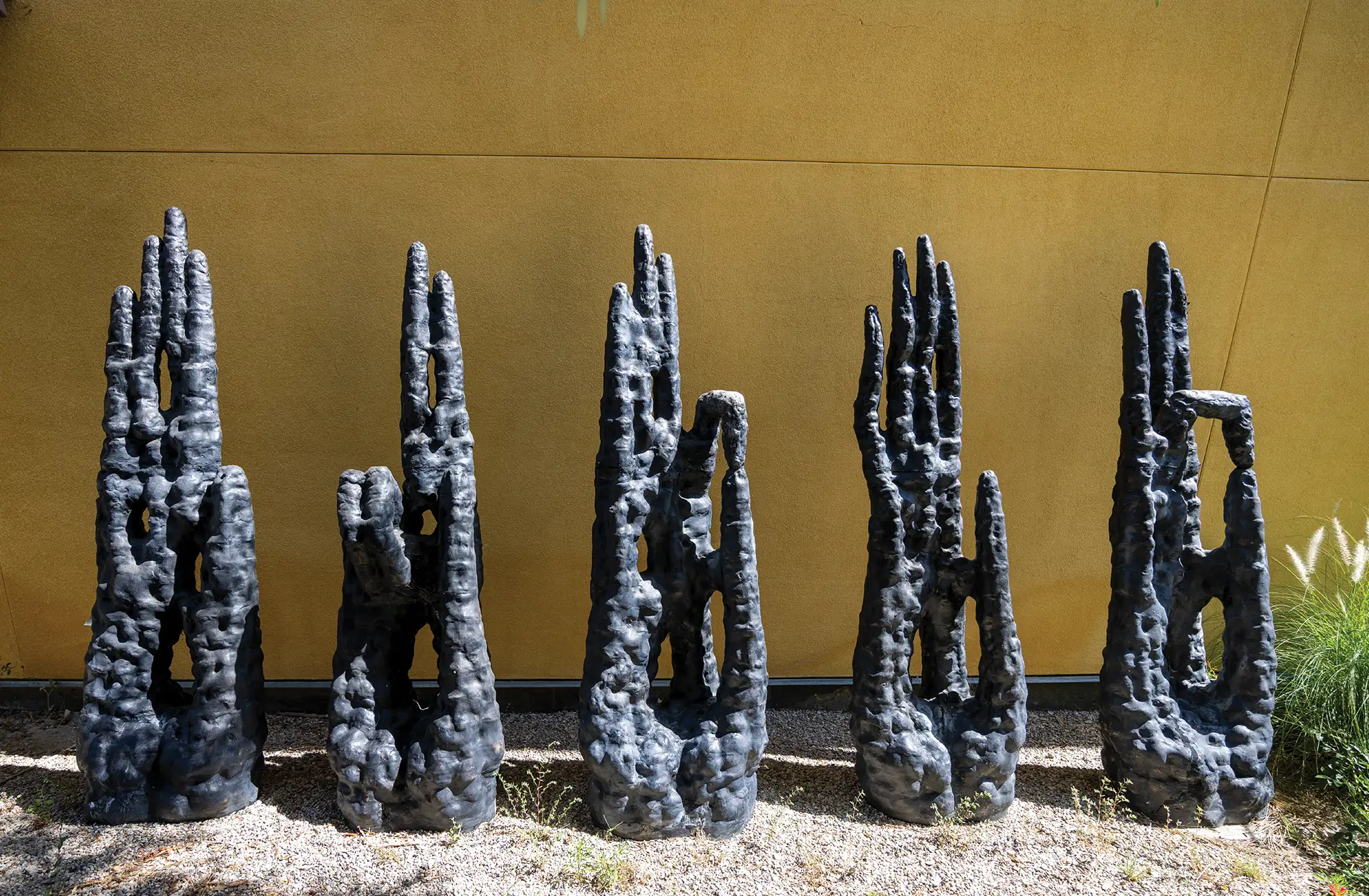
Installed in 2005, “Heavenly Hands” are the work of Romanian artist Patriciu (Patrick) Mateescu. They were donated by CSUN engineering professor Ileana Costea and alumnus Ion Baroi, and Costea arranged for the artist to fashion and fire the work right on campus, as artist-in-residence. (Baroi serves on the board of the Hamangia Foundation, which also established a scholarship in ceramics in the Department of Art.)
The hands stand sentry in front of the university’s Art and Design Center, where thousands of art students have studied over the years. The complex is also home to the CSUN Art Galleries.
“The ‘Heavenly Hands’ are religious symbols of Byzantine influence, strange formations of the clouds evolving from the sky or maybe directly from divine transcendence,” Mateescu wrote.
“Steel Sculpture Group”
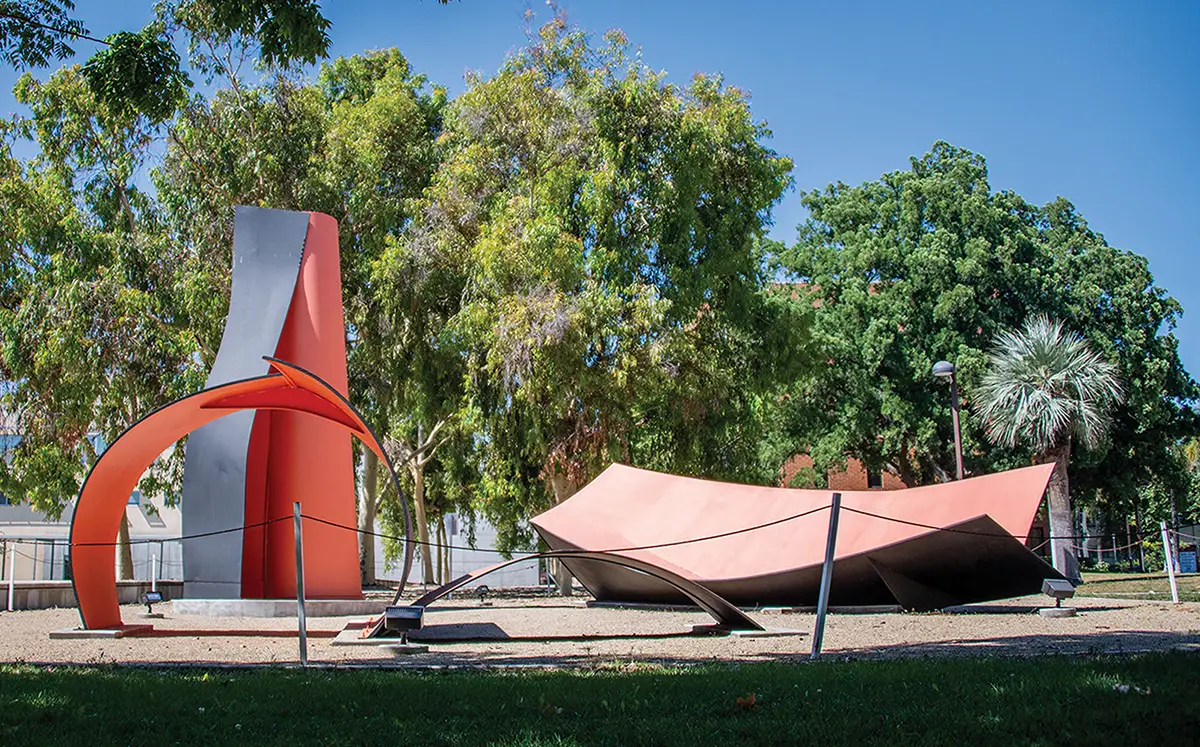
The painted steel sculpture with three elements originally was loaned and installed at Valley State in 1970, adjacent to the campus’ acclaimed Fine Arts Building, which was designed by famed architect Richard Neutra. Stern simply called the work “Steel Sculpture Group,” but as with all public art and sculpture on campus, Matadors gave it much more interesting nicknames, especially the music, art and theatre majors: the orangey sculpture, the tubes, the Fine Arts sculpture.
A casualty of the 1994 Northridge earthquake, the Fine Arts Building was dismantled in the mid-1990s, and with it, Stern’s sculpture. As the campus recovered and leaders tackled massive reconstruction projects, the sculpture was stowed in a fenced area behind the surviving Nordhoff Hall.
Finally, in early 2020, a crane lifted the pieces into place in the sculpture’s new home: the popular lawn between Manzanita, Nordhoff and Cypress Halls — a busy campus crossroads between the Sierra Quad and The Soraya. Set on new concrete footings, “Steel Sculpture Group” also got a fresh coat of paint and outdoor lighting, thanks to CSUN’s Mike Curb College of Arts, Media, and Communication, and Physical Plant Management (PPM).
Stern was a native of Germany who emigrated to the United States as a boy, and he went on to earn a degree in industrial design at Syracuse University. He later settled in Southern California, where he made the switch to full-time sculptor. Stern completed a number of very large public art commissions, primarily in mirror-polished stainless steel, including at the iconic Prudential Building in Boston and near Grand Central Station in New York City. His works are also in the collection at the Smithsonian’s Hirshhorn Museum in Washington, D.C.