

Alexandra Davis
College of Science and Mathematics
Davis is a true believer in the mission of the CSU, because she lived it. That’s what attracted her to teach at CSUN, where, like many of her colleagues in the College of Science and Mathematics, she hopes to pay it forward. She aims to push open even wider the doors of research, lab work and publishing opportunities for students from underrepresented groups.
Davis studies fish habitats and communities, and she spent six weeks in Mo’orea, French Polynesia, this past summer conducting research — along with her grad student, Camille Jones — and training undergraduates on open-water and scientific diving. — Olivia Herstein

-
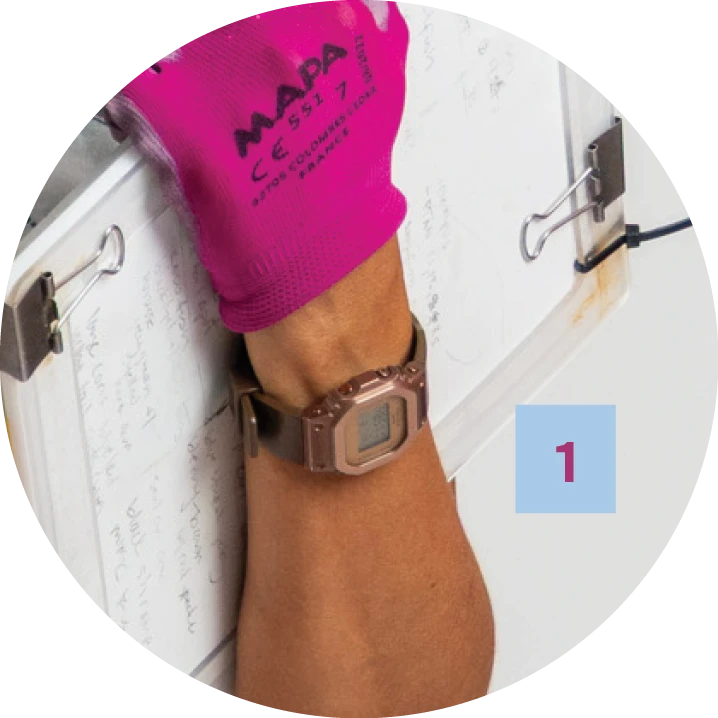 Waterproof watch:
“Watches are important because you always need some kind of timekeeper when you’re diving. You need to know how long you’re down there.”
-
Brimmed, waterproof hat and sunscreen:
Sunscreen, the most important item in her bag! “I tell my students, ‘wherever you go, you’d better keep putting sunscreen on.’ We spend a lot of time in the sun, and any time you’re on the water it’s worse because of the reflection.” She recommends SPF 50 and one that’s “reef-safe” such as a zinc-based lotion, which is less detrimental to corals and other marine organisms. Davis appreciates this hat’s design because it includes a hole in the back for her ponytail, and a cinch to keep it secured under her chin.
-
Dive slate:
This low-tech tool wowed our creative team. Who knew there was such a thing as underwater paper?! (Marine biologists and other divers did, of course!) Davis’ dive slate clipboard carries waterproof, no-tear paper (which feels like it’s made out of plastic), as well as a woodless pencil attached to the slate by a small, rubber hose. After she returns to the surface, Davis takes pictures of everything she’s written underwater, as backup copies. “How do you remember everything you see underwater? You have to write yourself notes,” Davis said.
-
Transect tape:
“It’s basically just a heavy-duty tape measure. It’s very common in terrestrial (land) ecology. They’re made really well, so they do well underwater, as long as you give them freshwater rinses after. It’s a good survey tool. To count organisms or do surveys, we use a transect tape to rope off sections. I do a lot of “belt transects,” where I’ll count everything on either side of the transect tape, such as fish, corals, algae, little invertebrates — like clams, sea cucumbers.”
-
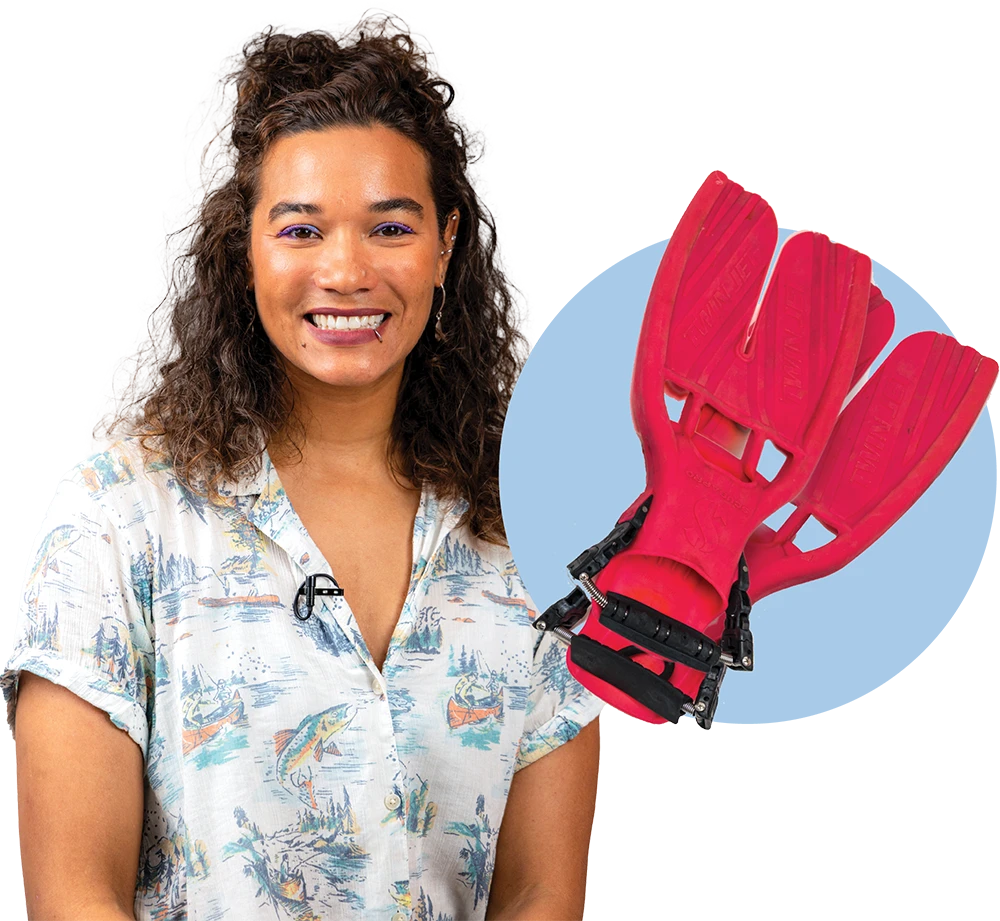
Dive fins, mask, weight belt:
“Pink is really easy to see underwater. When I started diving, these were the only pink fins on the market, so I was really recognizable. Depending on how much neoprene you’re wearing, you’ll put on enough weight to counteract how floaty you are. For Mo’orea, I wear a 4 mm wetsuit, because I get cold really easily, so I’ll have about 5 to10 pounds on my weight belt to counteract the floaty-ness of my wetsuit.”