

Paula Thomson
College of Health and Human Development
aula Thomson is on a mission to help students find their own artistic voice and nurture their creative vision and expression. A professor of dance and kinesiology, Thomson has been teaching at CSUN since 2005. A modern dance specialist, she’s mentored thousands of young dancers and helped build the university’s program from a few courses to a popular minor and even a B.A. in dance. She’s also a licensed clinical psychologist researching the mind-body connection: Along with colleague and kinesiology professor Victoria Jaque, Thomson studies resilience and risk factors in stress for performing artists and athletes. They’ve also researched post-traumatic stress and how creative activity and performance can build resilience.
A native of Canada, Thomson taught at York University in Toronto before coming to CSUN, and she has vast experience choreographing for dance companies, theater and opera.
“We really encourage our students to learn choreographic skills, so they can speak and say what they need to say,” Thomson said. “I’m interested in the creative process and really nurturing problem-solving.”
-
 Ballet slippers:
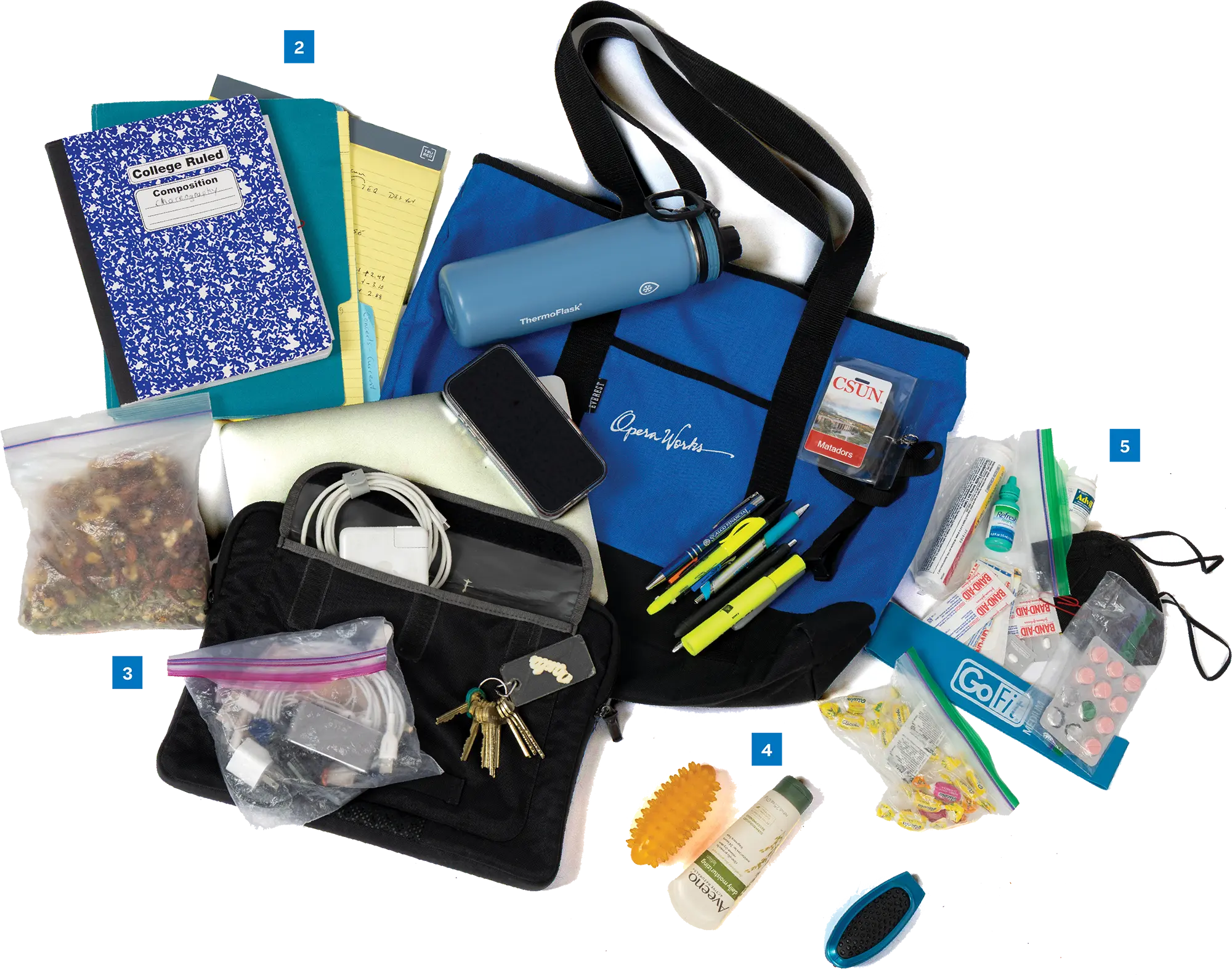
“After a while, old ballet slippers become sandals because your toes go through,” Thomson said, laughing. “Then you need to buy new ones.” These standard ballet slippers allow a dancer to turn and provide stability. When she’s teaching or performing modern dance, Thomson said, she’s barefoot.
-
Choreography notebooks and folders
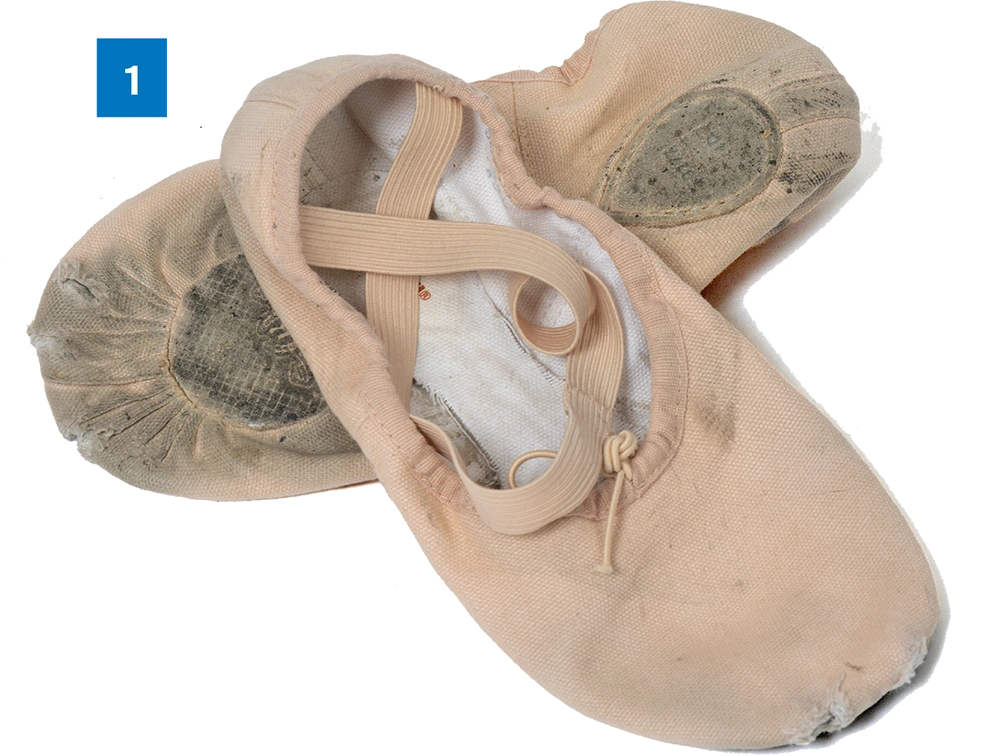
Thomson often travels with several notebooks, including a composition book where she plans choreography, counting out the music and building sections of a performance. She uses her cell phone to film choreography but also keeps written notes “because I’m old-school.” The yellow legal pad includes notes and statistics on her research work.
-
Snacks!
“All dancers quickly learn that you should always have a bag of trail mix, because sometimes you don’t get a chance to have a full break — and you need little protein-rich snacks throughout the day to keep you going,” Thomson said. She makes her own (thanks, Costco!) and often shares. She reuses a Ziploc bag countless times.
-
Foot roller and Theraband
The spiky, rubber roller is one of a dancer’s best friends: rolling out the feet helps alleviate foot cramps. The Theraband, which comes in a variety of colors and levels of resistance, aids in stretching — stabilizing and strengthening the glutes and the core.
-
Band-aids and Advil
Dancers frequently tear up their feet, so bandages are indispensable, Thomson said. Advil (ibuprofen) is also key for dancers battling inflammation or pain.